How to Spike a Volleyball: 3 Bad Habits to Break
Coach Artie on how to spike a volleyball: the three bad habits holding you back, and the cue that fixes each, from the surfing stance to the crescendo.
Coach Artie
Level 3 national coach · Skybound Volleyball, Brisbane
On this page
If you're learning how to spike a volleyball and you're struggling to generate power and be more accurate, stop. These three bad habits are holding you back. Keep them in your game, and getting to the next level stays really, really hard.
First, some grace. Spiking is one of the most complex skills in volleyball: so many parts moving at once. It is genuinely hard, and that's normal. It's all right. I'm Coach Artie, head coach at Skybound Volleyball, and I got your back.
Here are the three habits, the cue that fixes each one, and what good timing actually feels like.
Bad habit one: don't finish your approach flat on to the net
I see this one every session. You finish your approach with your feet parallel and your whole body facing the net. Flat. It feels powerful, right?
Here's how power actually works when you spike. It comes from your abs. It comes from your shoulders. People say about 50% of your power comes just from the rotation of your shoulders. It doesn't come from how big your bicep is. The engine is your body, rotating.
Now here's the problem. If you're facing the net and you rotate through your swing, the ball flies crazy out. Power, at the cost of accuracy. Fully rotate and you're facing the wrong side of the court.
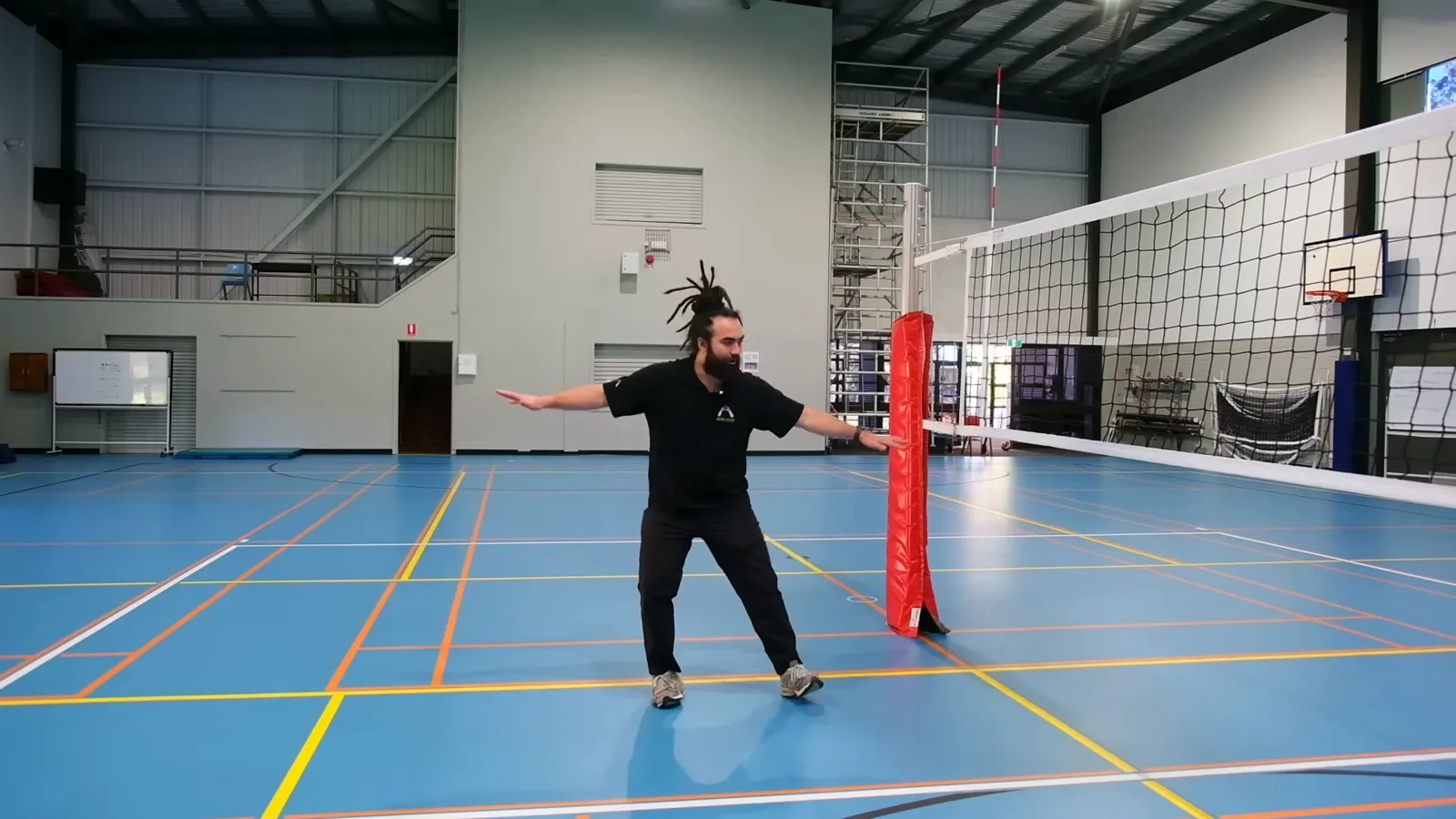
The fix is your last step. Instead of walking straight in, your last step goes out to the side, so you're angled, like you're surfing into the net. I call it the surfing stance. We're not walking in, we're surfboarding in. That last step pivots your body around, so now your shoulders rotate to face most of the court. You get the power, and the ball still goes where you want. Crosscourt and line, same technique, all from where your last step landed.
And it's an easy fix. You're not changing how many steps you take. You're not changing the tempo. You're only changing the placement of your last step.
One more thing. Flat footwork leans on your abs and your back alone, and those muscles can't carry that load forever. The surfing pivot protects your body, not just your shot.
Bad habit two: start your approach outside the lava
As a spiker, do you touch the net a lot? Does your approach feel jittery instead of flowy? I know the reason. It's where you start.
Players who touch the net usually start their approach right here, inside the attack line. From the attack line to the net is only about two metres. When you're 10 or 11, that's enough room, and you can get by. But the more you grow, the longer your legs and steps get, and the more space you need. Even the tall players touch the net, because they do this exact habit.
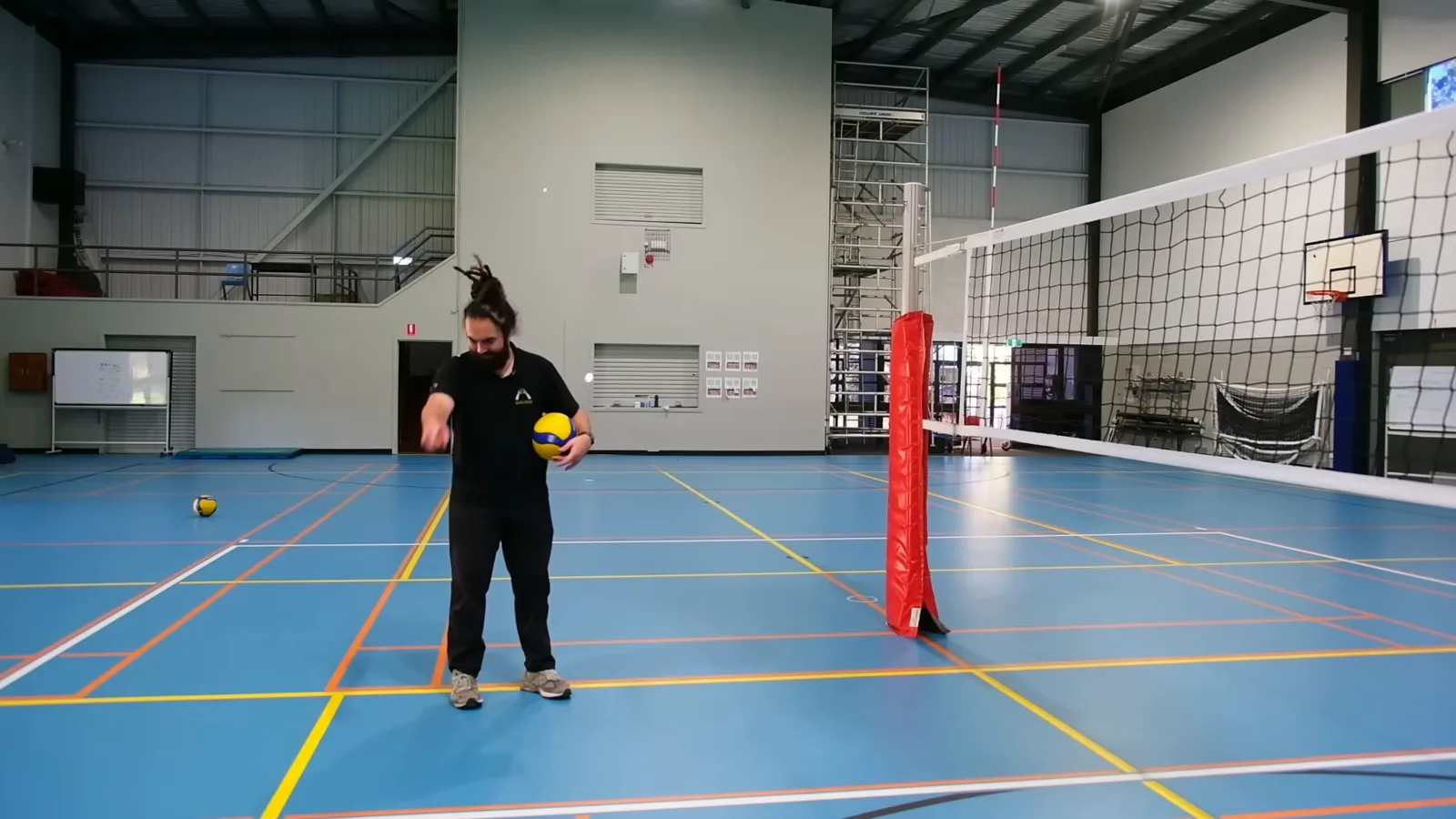
So here's how I think about it. If you're inside the attack line when you start your approach, you're dead. That zone is the lava, and I need you to stay out of it. I don't care how you get out: turn, shuffle backwards, whatever it takes. Just get out before your spike approach starts.
They tip it, and you dig it. Now what? Do you stand in the lava and admire your dig? No. We move. People call it transition. I call it ready up, because ready up sounds cooler.
Oh my goodness, now look how much space you have. All the space in the world. You run in with big steps, and even after all of them you still have about a metre of fly room. You hit, and you're still off the net. That's the difference between a swing you control and a net touch.
The habit to break is simple: get out of the lava. Don't die. If you're not the one passing or setting, get your butt out of there and go in for your spike. Don't start here. Start there.
Bad habit three: stop taking three steps the same size
Watch any great spiker and you'll see it: flow. Their approach is not bang, bang, bang, jump, hit. It starts slow, then it builds into a massive crescendo. That's the shape you want: small, bigger, biggest, crescendo.
The beginner mistake: every step the same size. Everything at the same volume, so nothing builds.
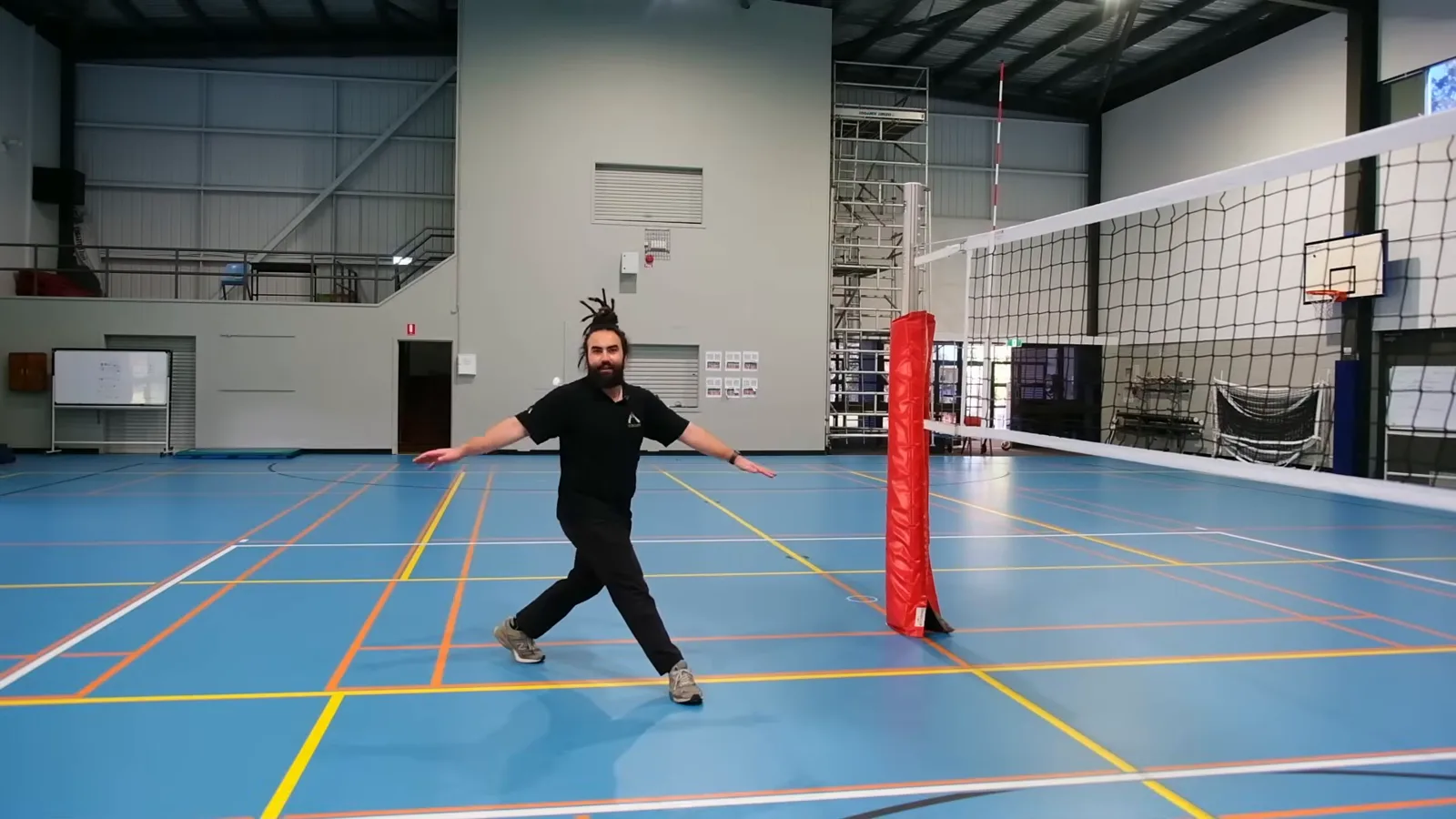
Here's the fix. Your first step is a baby step. Half a normal step. This is your adjustment step: you see the set, you adjust, you stay calm. Your second step is a normal walking pace step. Your third step is the biggest step ever, and you launch off it. Then your feet come together, and you're up and over.
Small, bigger, biggest, crescendo. One more time. Small, bigger, biggest, crescendo.
It's music. And it's not a crescendo if everything is loud. Piano, piano, forte, forte, crescendo. Small at the start, big at the end. That's how you get flow.
Right now, if your approach feels jittery, you're dancing with earmuffs on. You can't hear the music, so you've got no rhythm. Take the earmuffs off. Listen to your footwork. If there's no flow, there's no crescendo, and without a crescendo there's no music.
What good timing feels like
What does good timing actually feel like? Not like panic. Jittery footwork feels like a fire drill: everything rushed, arriving at the net late with nowhere to go.
Good timing feels like music. Your first step is calm, because it's tiny and it's just your adjustment while you read the set. Then the steps build, your last big step loads you, and by the time the ball drops into your window you're rising to meet it, not chasing it. Boom, you're up, you rotate, and the ball is gone.
The other two habits feed this one. You started outside the lava, so you had room to run in at full speed. And your last step surfed you into the net, so your rotation carries the ball into the court instead of out of it.
If you want to feel it faster, watch your favourite player spike. Every high level spiker has a rhythm to their approach. You can see it, and eventually you'll hear it too.
How to spike a volleyball: the three fixes, one more time
Three bad habits, three cues. Take them to training this week.
The three fixes
- Surfboard into the net. Change the placement of your last step, nothing else.
- Stay out of the lava. Ready up outside the attack line before your approach starts.
- Small, bigger, biggest, crescendo. Give your footwork a rhythm.
Watch the full breakdown on my YouTube channel: Spiking a Volleyball - 3 Bad Habits you need to break.
Train your spike with me in Brisbane
Fix these three and everything else opens up. Then the next step is the block: learn to see what the blocker is doing before you swing in How to Beat the Block, and if you want to be the wall yourself, my five blocking keys will get you there.
Skybound Volleyball trains at Macgregor State High School, capped at 16 players. See the full schedule on the programs page or register on the Skybound portal.
So go practice your spike approach. Surfboard in, stay out of the lava, small, bigger, biggest. Good journey.