How to Serve a Volleyball: Get It Over and In
Coach Artie breaks the overarm serve into a throw you already know: the toss, the contact, the follow through, and how to keep it in when it matters.
Coach Artie
Level 3 national coach · Skybound Volleyball, Brisbane
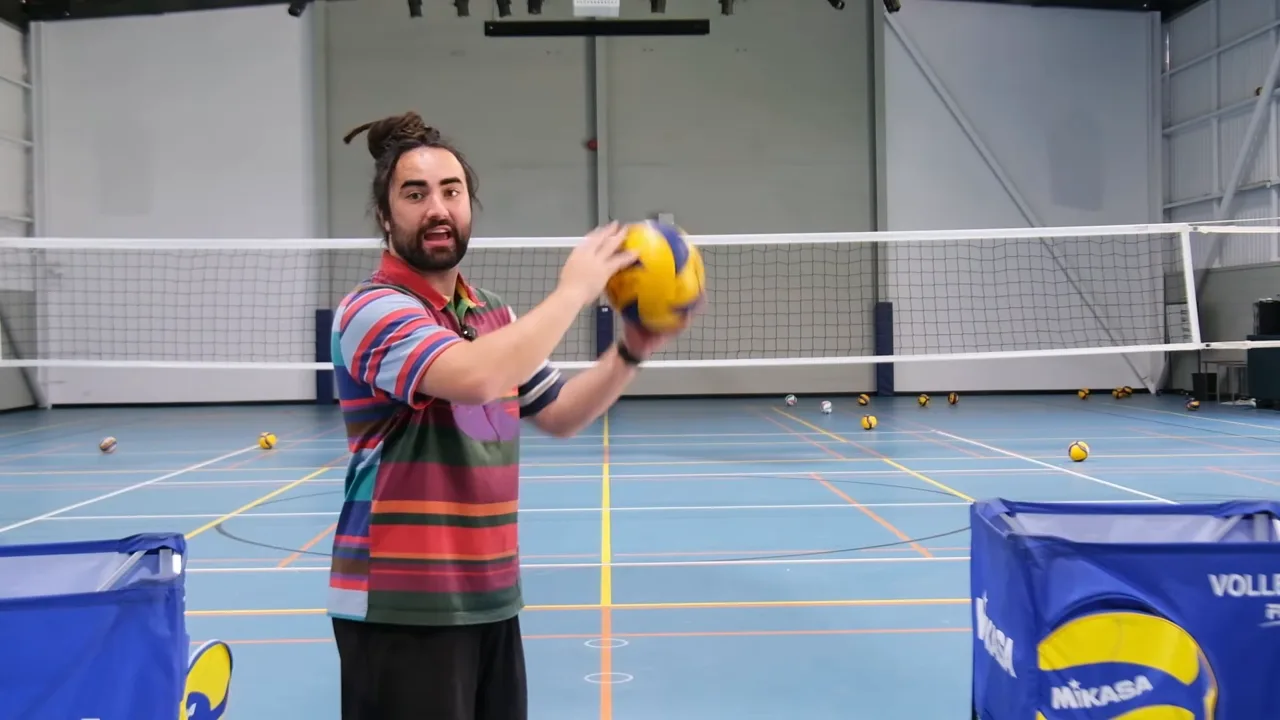
On this page
You can get this ball over the net with an overarm serve. It's that easy.
But let me be honest with you first. The overarm serve (a lot of people call it the overhand serve) is really hard for a lot of players at the start. You learn the underarm serve first, and that's basically a bowling swing. Then you're asked to do this completely different motion, a throw. It's a big transition, and it feels awkward for a while.
Here's the good news. You already know how to throw. Your serve is just a throw with a contact on the end of it. Same muscles, same timing, same flow. Once that clicks, serving stops feeling like a mystery.
Your serve is a throw, so build the throw first
The first thing to practice is not serving. It's throwing.
I want you to throw with your whole body. The power in a throw does not come from your arm. It starts from your feet, moves to your hips, your abs, your shoulders, and finishes in the arm. The arm is just the whip at the end of the chain.
Think about a boxer. When they punch, they lead with a hip, and the rotation brings the whole body around behind the punch. Serving and throwing are the same. You step in with your opposite foot, you rotate through your hips, and the arm whips around last.
Let's be honest, it will feel awkward at first. You might feel like your arm is stuck to your side. That's normal. I want it flowing, because when we throw the ball correctly, that's the exact motion we're using when we serve.
So go throw the ball over the net. Over and over. Get used to the feeling of your whole body working together. Nobody gets better at anything without reps.
Place the toss, don't chase it
When a lot of players toss the ball, they throw it up and go "woo!" It's different every single time, so they have to adjust every single time. That's where the inconsistency lives.
I just place the ball. Right in front of me, and I contact it high.
A lot of coaches say to toss in line with your shoulder, and I agree, that's a great idea. But I don't want to limit you either, because a toss slightly outside your body is how you put side spin on the ball. It's different for everybody. Different arms, different eyes, different bodies.
So instead of giving you an answer, let me give you an exercise. Find a wall and toss the ball in three places: out in front, on top of your head, and behind your head. Watch what happens.
Toss behind your head and the ball sails up like a sky ball. Toss too far in front and your contact gets low and the ball goes flat. You've just found your first dial. If your serve isn't getting over the net, adjust the toss. If it's loopy and soft, toss further out in front and contact closer to your body.
Contact the face, not the hair
I've seen coaches put a little face on their hand and say the contact is the face, not the hair. I like that one a lot.
The hard part of your hand, the heel and the palm, is where the power comes from. If you paintbrush the ball with your fingers, there's nothing behind it. Lead with the palm, let your fingers wrap around, and make a real connection between your hand and the ball.
Bang. That's power.
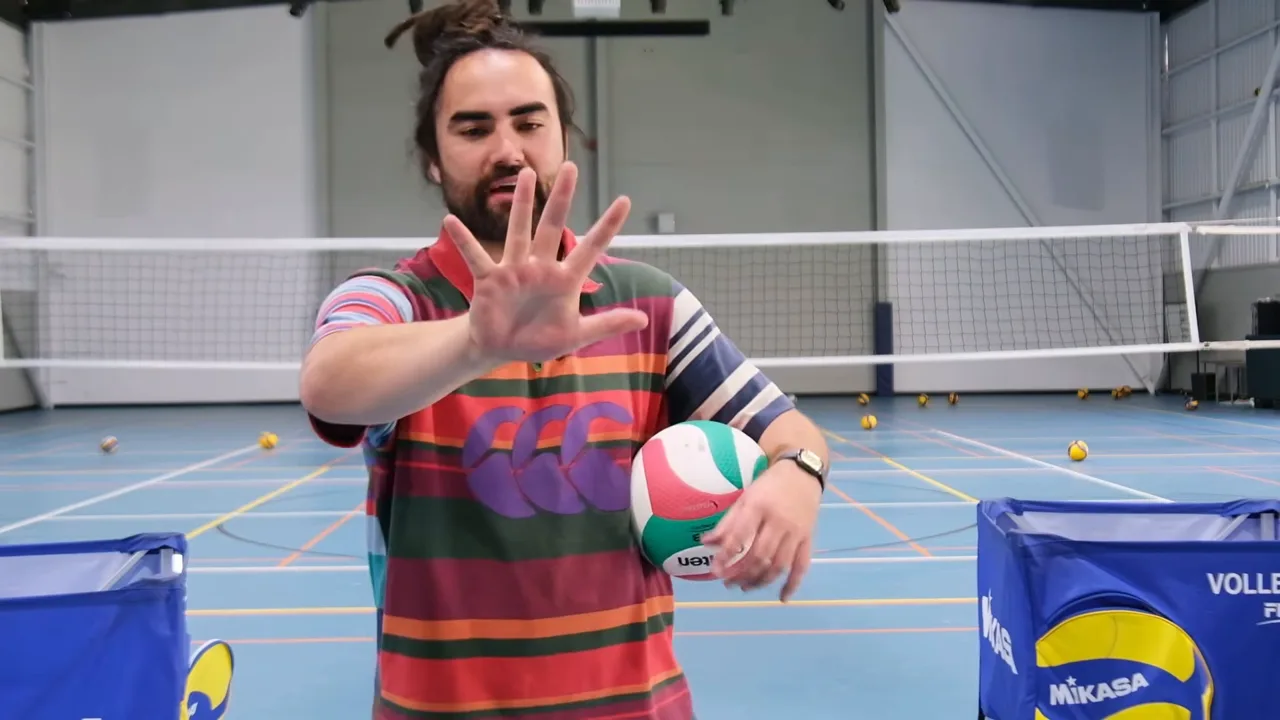
And where do you contact it? I like thinking about a high five. You're reaching out and high fiving in front of your body. You don't high five behind your head, and you don't high five someone by running past them.
If it helps, think about a clock face. Contact the bottom of the ball and it goes up. Contact the top and it goes down. For a standing serve from behind the line, contact slightly underneath the ball, around 8 o'clock, so it travels up and over the net.
Place, step, hit
That's the whole serve in three words.
Place the ball. Step in with your opposite foot. Swing your hip through, let your arm come around like a whip, contact at 8 o'clock, and follow through.
Don't overthink it. You don't need a powerful body to do this.
How to serve a volleyball that won't stay in
Now you can get it over. Here's the next problem: sometimes it goes in, sometimes it goes out, sometimes it goes into the net.
Your toss is the first suspect. Every serve is two things, the toss and the contact. If your serve keeps sailing out to one side, your toss is probably drifting that way and forcing you to chase it. So adjust the toss in the opposite direction and watch the ball travel where you want.
Same for height. Not getting over the net? Toss a little further back and contact closer to your body. Sending big loopy lollipops? Toss further out in front.
There's a second dial, and this one is on the ball itself. You can contact the left side, the middle, or the right side of the ball. Contact the left side and it goes one way. The middle, straight ahead. The right side, the other way. That's subtle control, just tiny changes in your wrist and contact point. It translates straight into your spiking too.
Watch the full control breakdown on my YouTube channel: How to Control Your Overarm Serve.
To be a great volleyball player, we need to be intentional. When I see junior players tossing it up and hoping for the best, I get it. Woo, that's awesome, it went in. But to control your serve, you need to understand every little thing that's going on.
How to practice your serve the right way
You need to practice this 100,000 times. That sounds like a lot. It's not, if you practice the right way.
Throw first. Then add the contact. Then serve.
If you're practicing at home, bring someone along. A friend, a parent, anyone. Give them very specific questions to answer, because they probably don't play volleyball:
When I tossed it, was it in front of me, on top of me, or behind me? Was my arm stuck to my side when I threw?
Ask your practice buddy these exact questions
That kind of feedback is invaluable. Even better, record yourself on your phone and watch your toss back. When you're learning, you don't always know what you're doing.
Train your serve with me in Brisbane
Once your serve goes over and in, everything else opens up. Then we can start adding a jump, and life gets a lot easier. Ready for the next step? Learn the jump top-spin serve. And when the score is on the line, serving aces is a different skill again.
Skybound Volleyball trains at Macgregor State High School, capped at 16 players. See the full schedule on the programs page or register on the Skybound portal.
You get better with your practice. So go practice throwing a volleyball.