How to Jump Top-Spin Serve: Step, Toss, Jump, Hit
A jump top-spin serve is just a spike from the back of the court. Coach Artie breaks down the quick-tempo toss, the step-first footwork, and the max jump.
Coach Artie
Level 3 national coach · Skybound Volleyball, Brisbane
On this page
You want to learn how to hit a jump top spin? Good, because I want to teach you. It's way simpler than you think.
Here's the secret at the start: a jump top spin serve is just a spike. That's why they're called spike serves. You're not spiking at the net, you're spiking from all the way back here. If you can already spike, you're halfway there.
The other half has two pieces: learning to set to yourself, and getting the order of the movements right. Most players get the order wrong. Let's fix that.
A jump top spin is a spike from the back of the court
Why do you need to learn how to spike to learn a jump serve? Great question.
Because the jump top spin is the same movement, just a little further away from the net. The approach, the swing, the contact, all of it. Your jump serve should look like your spike. If it doesn't, you're leaving free power on the table.
So before you go any further, watch my breakdown on spiking a volleyball. You don't need a perfect spike. You need a spike. Then we reverse-engineer the serve from it.
Quick tempo: the toss is shorter than you think
When you watch the top servers, you see these huge high tosses. Those are really hard. We're not starting there.
We start with a quick tempo serve. That's what I call it, and you can guess why. Cuz it's quick.
The toss is short. Think about a middle running a quick tempo ball through the middle. How high is that ball? Not very high. Maybe the height of the antenna. That's the same height as your toss.
The higher the ball, the more problems we have. So keep it simple. Short toss, short problem. Once you can land this one, you've got a change-up serve that catches defenders off guard. They're still waiting for the ball when it's already on their lap.
Step first, then toss: step, toss, jump, hit
This is the part that separates a good jump serve from a floating mess.
Normally, when we do a jump serve, we toss, we do our footwork, we come through, and we swing. That timing is wrong for a quick tempo. We don't toss first.
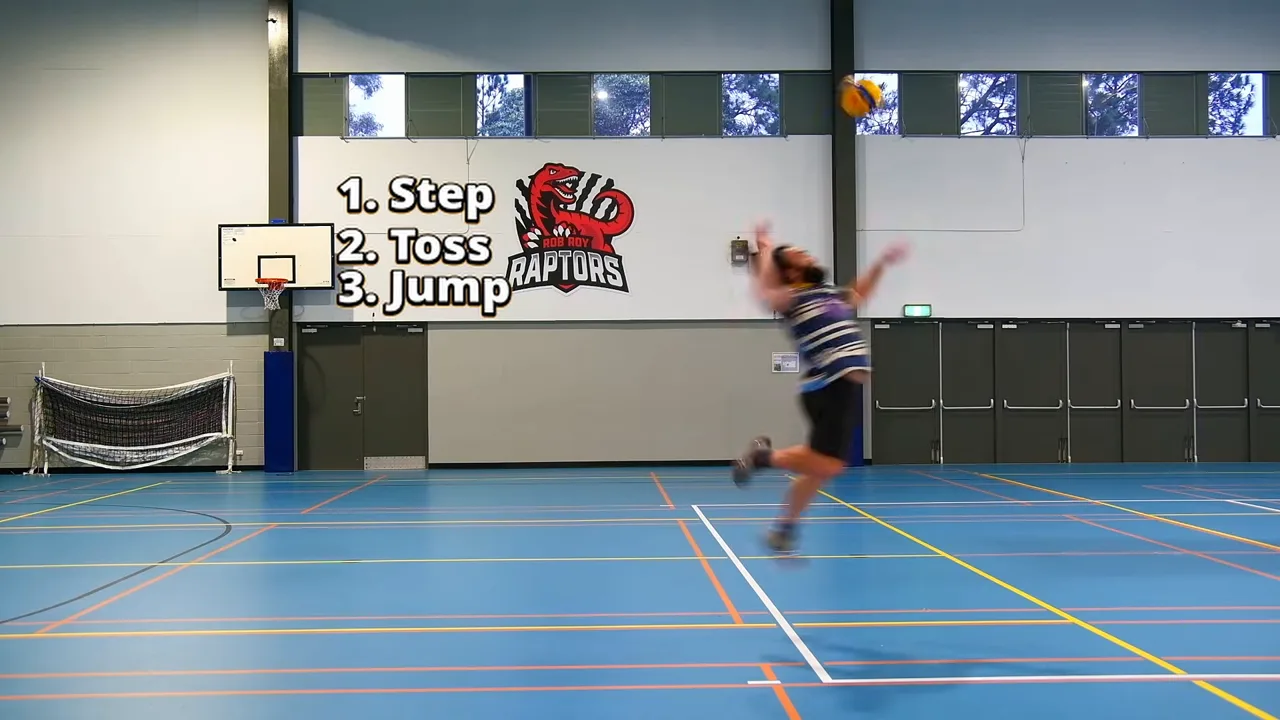
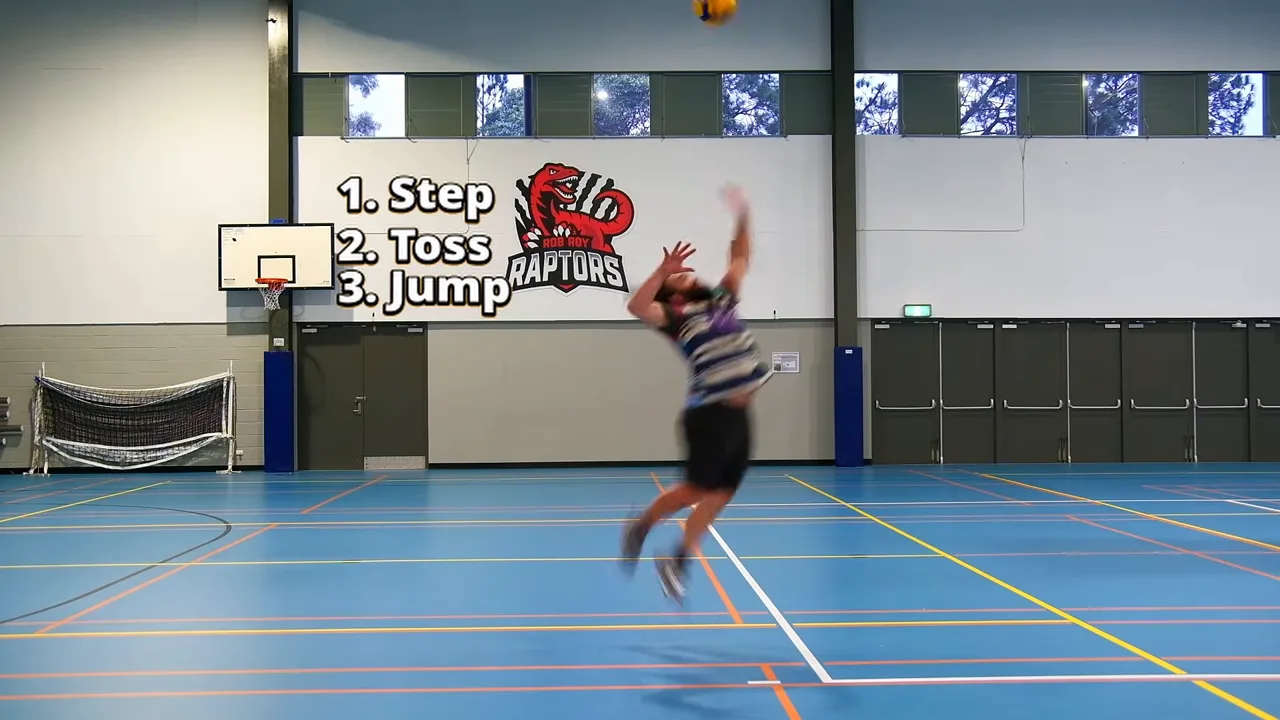
We step first. Step, toss, jump, hit.
Say it out loud. Step. Toss. Jump. Hit. Then go drill it. This sequence is the whole serve. It's hard to talk and do at the same time, I know. Practice it slowly, then speed it up, then add the ball.
Is it awkward at first? Yes. Is the timing off every time? Probably, for a while. You get better with your practice, so practice it on the spot before you worry about serving hard.
Max jump, and jump into the court
Now, the tips that turn this serve from decent into deadly.
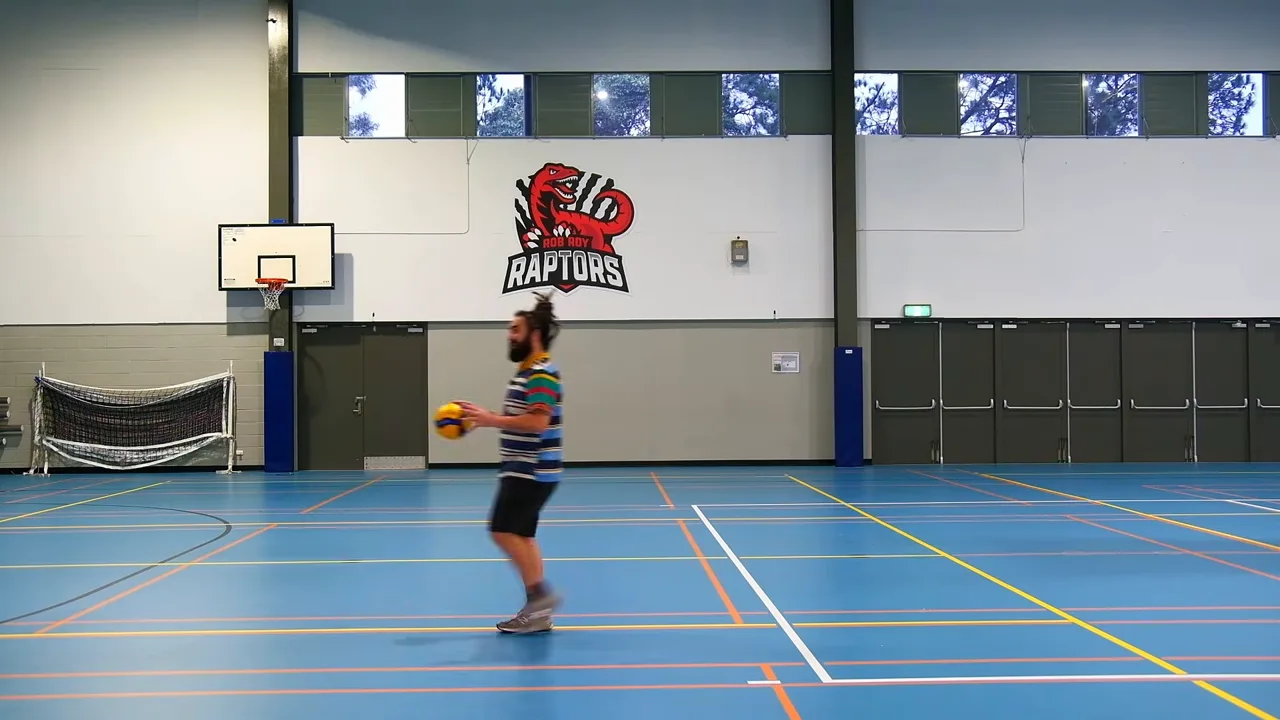
Jump high. I ask jump servers all the time: are you max jumping? They say, I don't know. Then I ask: do you jump higher when you spike or when you serve? They say, 100%, I jump higher when I spike. Your jump serve is exactly like your spike. You should be doing the exact same thing, just further away. Always max jump.
Why does it matter? The higher you contact the ball, the further down it can travel. If you're in line with the net, the ball has to go up and over. If you're above the net, it can go down, and that's when it gets really deadly.
Jump into the court. Would you rather I served at you from far back, or from close up? Everyone prefers the far one, because you get more time to react. So you jump in and take that time away. Your guide: land at least a meter and a half inside the court.
Power from the body, not the arm. No matter how big your arm is, it's not strong enough. The power comes from your shoulders, your abs, your back, your motion. When you jump in and your body is moving, the serve gets heavier for free.
Do it because it's fun
One rant, then we're done.
Everyone will tell you to serve aggressive float serves instead. On the younger ages, sure, the float is easier and it's what wins. But we don't play this sport because we want to be aggressive. We fall in love with it because it's fun.
The number one reason people quit sports around the world is that it stops being fun. So if someone tells you to stop working on a jump top spin, here's your answer: you want me to quit, bro? Because I will. Stop gatekeeping skills. Learn the fun one.
Train your jump serve with me in Brisbane
A jump top spin is a spike, a short toss, and the right order. Step, toss, jump, hit. Go earn it with reps, and when you land the first clean one, you'll feel it.
Watch the full breakdown on my YouTube channel: How to Jump Top Spin Serve.
Skybound Volleyball trains at Macgregor State High School, capped at 16 players. See the schedule on the programs page or register on the Skybound portal.
You get better with your practice. So go practice volleyball.