How to Block a Volleyball: From T-Rex Arms to Tiger Pounce
Blocking gets taught as hands up, hope for the best. Coach Artie breaks the skill into five keys juniors can use tonight, plus the advanced reads.
Coach Artie
Level 3 national coach · Skybound Volleyball, Brisbane
On this page
Blocking is the skill nobody teaches properly. Most coaching stops at "hands up, jump high, hope for the best". That works when you're a junior. Then spikers get smarter, and blockers who never learned the details start losing rallies.
I'm Coach Artie, head coach at Skybound Volleyball, and I got your back. Here are the five keys I teach every blocker, straight from my full breakdown on the skill, plus the advanced reads that separate a good blocker from a scary one.
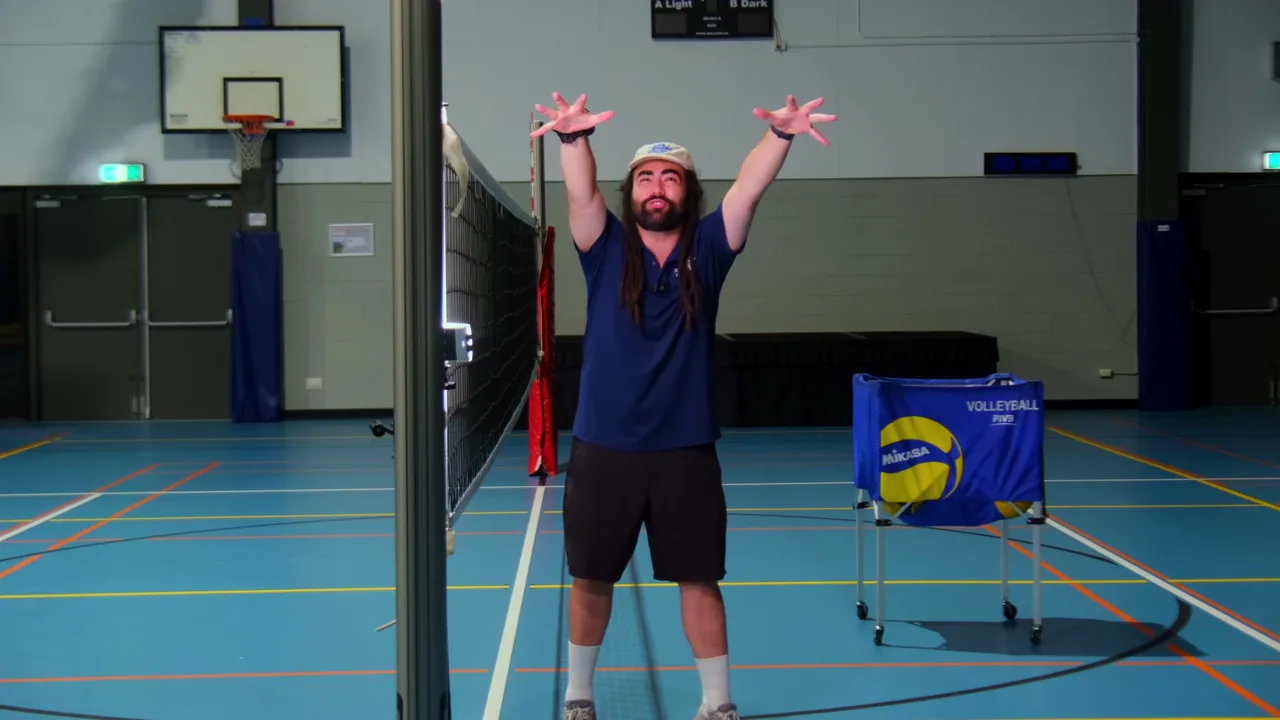
Key one: T-Rex arms
T-Rex arms means hands up, elbows bent, tucked in close. Tiny arms. It feels silly. It works.
Two reasons. First, it gives you space from the net. Stand with your hands tucked and you naturally sit about half a metre back. Second, your hands are already up, ready to block.
Skip the T-Rex and this happens: arms down by your side, you jump, and your momentum carries you into the net. Net touch. Point gone. Don't be the player who looks like a dolphin stuck in a net. Be a T-Rex. Spaced, ready, dangerous.
Key two: tiger pounce
Most people get taught that blocking is a defensive skill. It's both, but I want you attacking. You're not standing at the net hoping the ball hits you. You're a tiger. The ball is your prey. You haven't eaten in two days.
So when you jump, push up and over the net. The further your hands get across, the fewer options the spiker has. Tigers jump far. Eat the ball.
Key three: suffocate the spiker
Here's my favourite one. I want the spiker going up to hit, looking at your block, and feeling claustrophobic. No options. Nowhere to go. Despair.
When I'm spiking against a really good blocker, I start psyching myself out before I even swing, and that's when I get kill blocked. That's the feeling to give them. Spiking is the most fun skill in volleyball. As a blocker, your job is to make it the least fun.
Suffocate the space. Smother them. Hold as long as you can.
Key four: pose in the air
This is the fun one. When you jump, stay in the air as long as you can. Pose, so the photographer gets the shot. Click. T-Rex, tiger, suffocating, arms over.
Holding your block even a fraction of a second longer changes everything. Jump, hold, hold, hold, release.
Key five: look to position six
You've done everything right, the block makes contact, and the ball flies out. Infuriating.
The fix: instead of jumping square to the net, turn and face position six, middle back. When the ball bounces off your block, it goes down into their court instead of out of yours. Same block, different angle, massive difference.
Face six. Your arms naturally follow, and the ball drops where you want it.
The advanced keys
The five keys are your foundation. These are what make you dangerous.
Footwork. Stop shuffling sideways and hoping. Use a three step approach: outside foot first, then left, right, together. Left, right, together, jump. The run-up gives you a higher vertical, the same way your spike approach does. Even if you're only moving half a metre, take the three steps.
Arms on the approach. I call it the T-Rex spike approach. Left, right, double arm lift, up. It's a mini version of your spike swing, it keeps your hands above the net, and it stops you hitting anyone behind you.
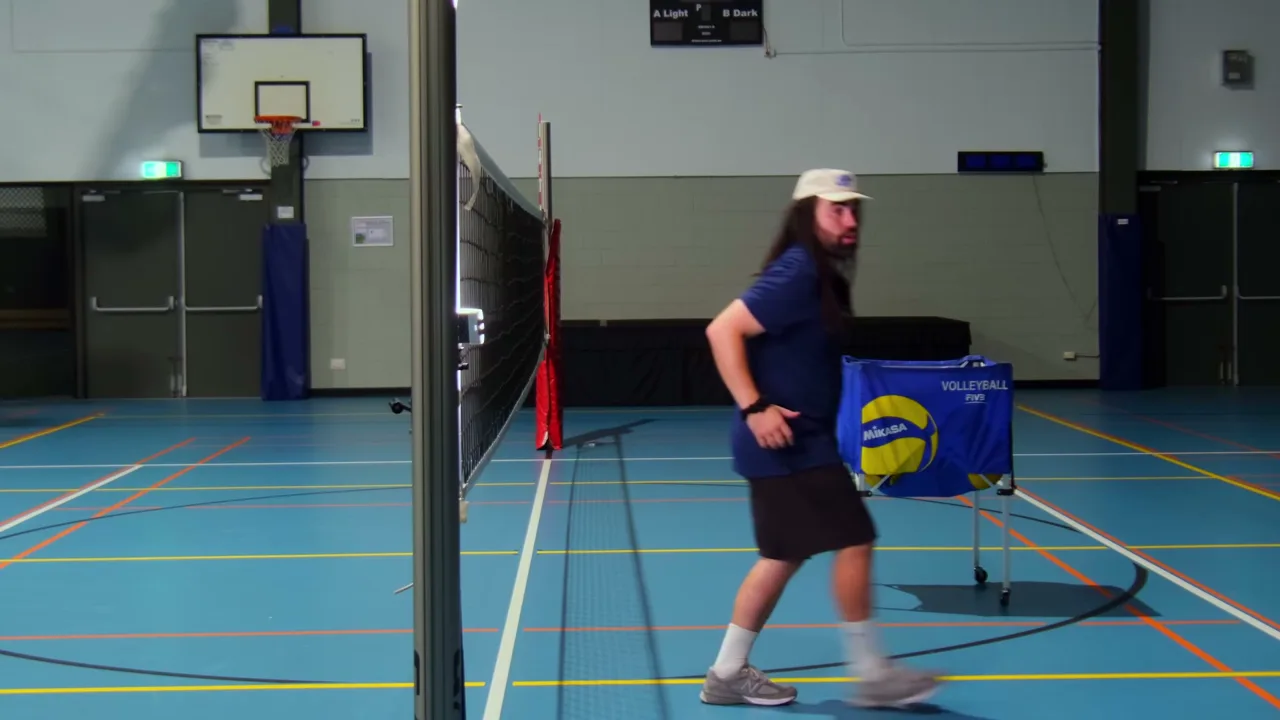
Read the game, not the ball. Most blockers watch ball, ball, ball, ball. Smart blockers watch: ball, setter, ball, hitter. The setter tells you everything, where the pass is taking them and where the set is going. Then the spiker, where they're approaching from, whether they transitioned far enough.
The quality of the set tells you what the spiker can do. Set too close to the net: they can only slug it or tip. Set too far off the net: it's probably a roll shot. Set past the antenna: they have to go cross. You can plan for all of it before the ball even reaches them.
Reading and planning is 95% of the game. Doing is 5%.
Land like a pro
After the block, land in a split step with your inside foot back. It protects the middle player's landing space, which protects ankles, which protects careers. And it sets you up to transition and spike. One landing, two jobs.
Train with Coach Artie in Brisbane
Blocking is hard. You'll touch the net. You'll get tooled. Be intentional, keep working the keys, and you'll be the blocker that spikers dread.
Skybound Volleyball trains at Macgregor State High School, capped at 16 players. I also run free sessions at Brisbane high schools. If you want me at your school, get your school to email me.
Register on the Skybound portal or email Coachartie@skyboundvolleyball.com. Go practice blocking like a tiger.