Volleyball Basics for Parents: Before the First Game
New to watching volleyball? Coach Artie breaks down the three touches, the libero's jersey, scoring, and when to cheer, so you can enjoy your kid's game.

Coach Artie
Level 3 national coach · Skybound Volleyball, Brisbane
On this page
So your kid just started playing volleyball. Congratulations. And now you're on the sideline watching something happen that you don't fully understand, and every game it looks a little different.
You want to be supportive. You don't want to be the parent yelling at the wrong time. And honestly, it's hard to cheer for a game you can't read yet.
I'm Coach Artie. I coach juniors and adults at Skybound Volleyball in Brisbane, and I make videos for exactly this: parents who want to follow the game. Here's the short version of the volleyball basics. The stuff you actually need before the first game.
Two teams, one net, six a side
Volleyball is simple at its core. Two teams, one net, six players on each side. The goal is to keep the ball off your floor and put it on theirs.
Think of it like a game of keep the balloon off the floor. Competitive edition.
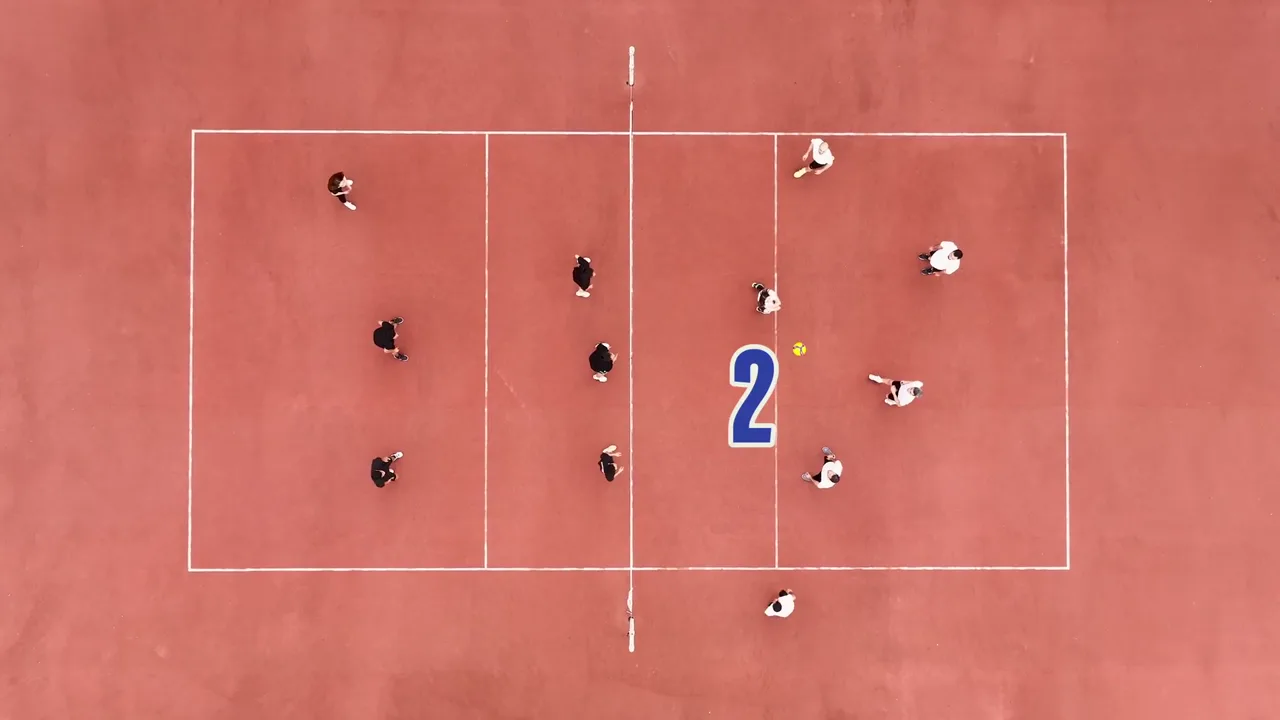
Your team gets three touches to send the ball back. Pass it, set it, attack it. When you see a team use those skills in that order, dig, set, spike, you're watching volleyball being played properly.
The three touches rule, corrected
Here's the part I tell parents first, because it confuses everyone: those three touches are controlled touches.
You can't touch the ball twice in a row. But if your kid blocks an attack and the ball stays on your side, the block doesn't count as one of the three. You get three more. It sounds like a technicality. When you see it live, it clicks.
And yes, a team can send the ball back on the first contact. But that wastes the rally. The whole point of three touches is to build up to an attack. Spiking is what wins points. It's also, let's be honest, what looks cool.
Why one player wears a different jersey
Every team hides a defender in a different colour shirt. That's the libero. (li-BEAR-oh. Nobody will correct you if you say it wrong, but the shirt is a dead giveaway that this kid is something special.)
The libero is a defence specialist. They dig, which is volleyball's word for picking up hard-driven balls, and they're usually the heartbeat of the team's defence.
They wear a different colour for two reasons:
- They can swap on and off the court between points, with anyone, without stopping play. The different jersey tells the ref it's all above board.
- They are not allowed to attack. If a libero spikes the ball, the point is lost. Their job is stopping attacks, not hitting them.
If you only remember one position, remember this one. It's the one other parents will ask you about.
Scoring, without the confusion
A rally ends when the ball hits the floor, goes out, or someone commits a fault. Every rally gives a point, whoever served. That's rally scoring. Win the point, win the serve.
Sets are first to 25. The deciding set is shorter, first to 15. Juniors usually play best of three. Yes, that means the last set has a different number. Thanks, volleyball.
When to cheer
Here's the thing nobody tells you: you can cheer whenever you want. Truly. Your kid might act embarrassed. They love it. They just pretend they don't.
If you want the moments that deserve it most:
- A spike that hits the floor. That's a kill, and it's the highlight of the sport.
- A huge attack picked up by the other team's defender. Honestly, sometimes this is more hype than winning the point outright.
- A kill block. The spike goes up, the block's hands are there, and the ball slams straight back down.
That last one hurts to watch in the best way. Cheer loud.
The quirks that throw new parents off
Two things look strange until you know why.
High fives. Constant high fives. After points, after mistakes, after anything. Nobody knows why. It's a volleyball thing.
Celebration. Volleyball teams celebrate more than any group I've coached in any sport. The opposition serves into the net? Cheering. A timeout? Cheering. Just go with it.
The 30-second glossary
- Dig: picking up an attacked ball off the floor.
- Set: the second touch, guiding the ball to the attacker. Usually two hands.
- Spike: attacking the ball down, hard, into the other team's court.
- Block: hands up at the net to stop a spike.
- Kill: a spike that lands for a point.
- Libero: the player in the different shirt. Defence only.
Train with Coach Artie in Brisbane
This guide is based on my video for volleyball parents. If it helped, read more about my coaching, see the programs and fees, or come and join us. Skybound Volleyball trains at Macgregor State High School, capped at 16 players a session.
Register on the Skybound portal or email Coachartie@skyboundvolleyball.com with any questions. Bring your new knowledge to the sideline. Go practice spectating.