How to Set a Volleyball: Fix the Habits Killing Your Sets
Learn how to set a volleyball the consistent way: Coach Artie breaks the five habits killing your sets and the foot, hand and contact fixes for each.
Coach Artie
Level 3 national coach · Skybound Volleyball, Brisbane
On this page
One set is perfect. The next sails over your spiker's head. The one after goes backwards. If you're trying to work out how to set a volleyball, relax. This is normal, and I've got your back.
Setting is one of the hardest skills in volleyball. So many subtle things are going on, and when you change one, it jumbles up like a Word document when you move a photo. You're like, oh my goodness, what's going on?
Here's the truth: you don't have a talent problem. You have a habit problem. And habits break the moment you understand them. Here are the five I see every week, and the fix for each.
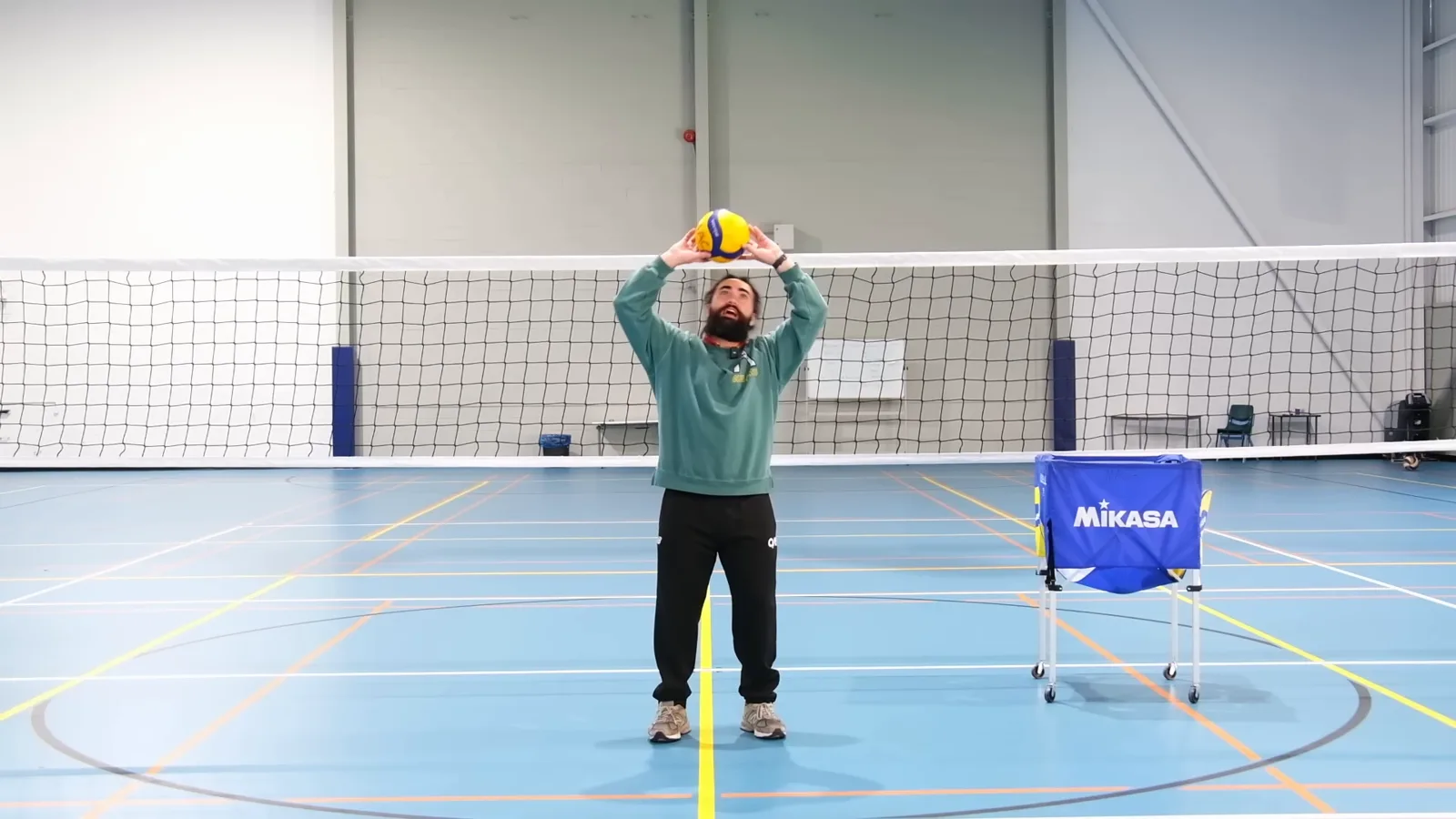
Habit one: you set off one foot
The first thing I look at in any setter is footwork, because your feet connect you to the world. Two feet on the ground, full control. One foot, half control. No feet, no control.
With beginners, I see it every week. They walk into the ball on one foot, or sit on one foot and drift backwards. One foot setting. Messy setting.
The fix: both feet stuck to the floor before, during and after your set. Stuck in the mud. No stepping, no skipping, no jump sets while you're learning. Planted feet cross half your problems off the list. Strong foundation, strong set.
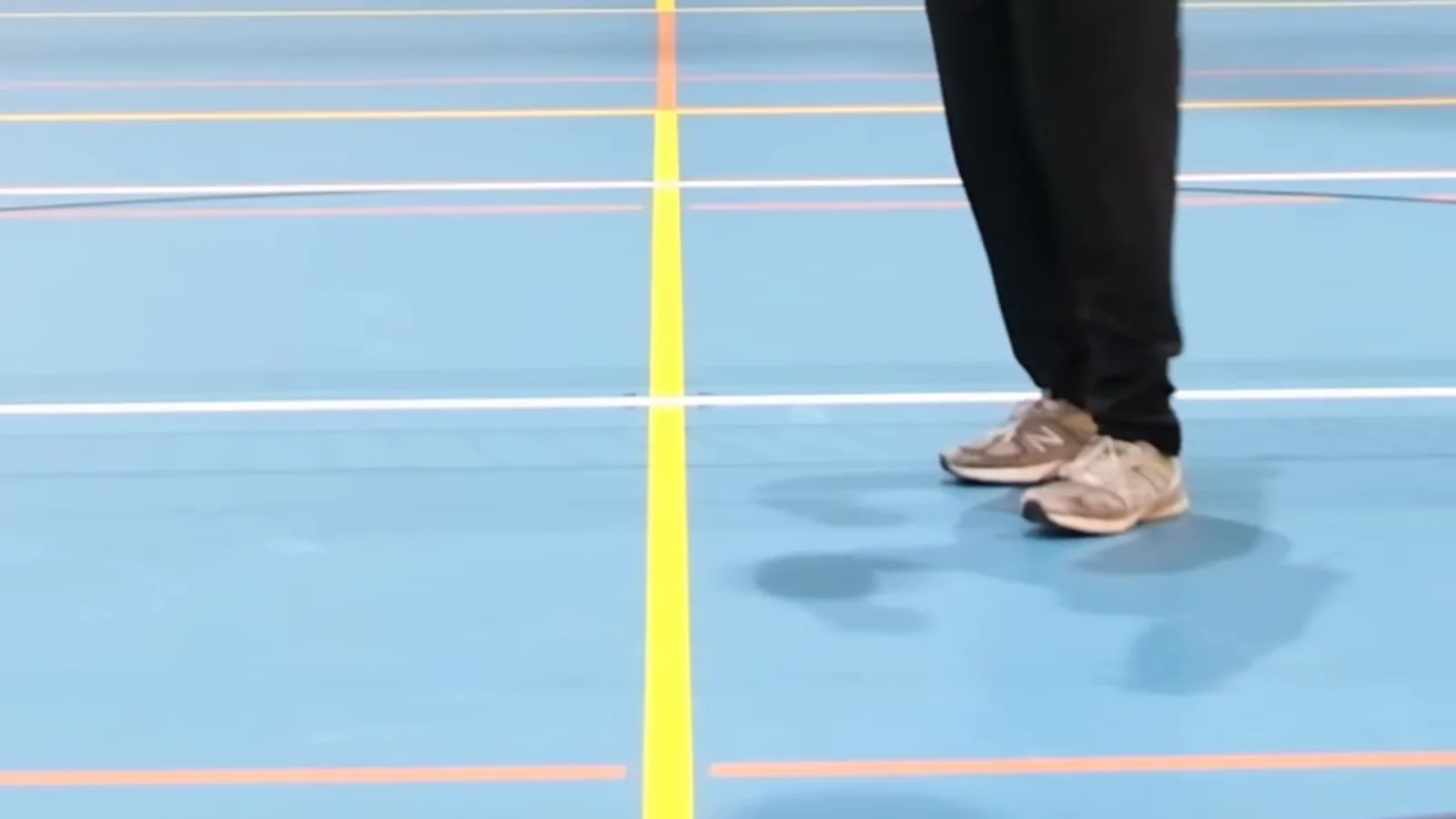
Read the ball early, get into position early, and move fast. Bang, bang, bang.
Habit two: you set over your body
This one is popular because it's convenient. You see the pass and set left or right with your arms.
Two problems. It's harder than it looks: our bodies are built to move forward and backwards, not sideways, and your head is in the way. And it gives everything away: setting to the side is awkward, and awkward is easy to defend. Your hands tell the blockers where you're going before you've even decided.
I know that thought, because I used to say it to my coach: it feels more comfortable this way. It doesn't feel better, it just feels familiar.
The fix: face your target with your whole body. That's the spiker, or the spot where they're going to contact the ball. My favourite cue, from a setter friend of mine: laser beams on your hips. Aim them at the post and set that way. Laser beams on hips, face post, set. That's a hot set.
Back set? Spin the beams to the back post and face that. Same shape, nothing given away.
Habit three: you set with blocker hands
Beginners set with what I call the blocking technique: two flat hands, palms out, like a block at the net. It's natural, and it's why you can't control the ball.
Look at your fingers: they control the top of the ball, that's it. What controls the bottom? Nothing. The ball wanders off.
The fix: burger hands. Your hands should look like you're about to eat a burger: thumbs down, fingers up and slightly apart, wrapping the sides of the ball. Fingertips control the top, palms control the bottom. The whole ball.
And when you finish, your hands stay above your head. Beginners set and their hands snap straight back down, a different movement every single time. So hold. Hands up, count a full second, then relax. Set, one, relax.
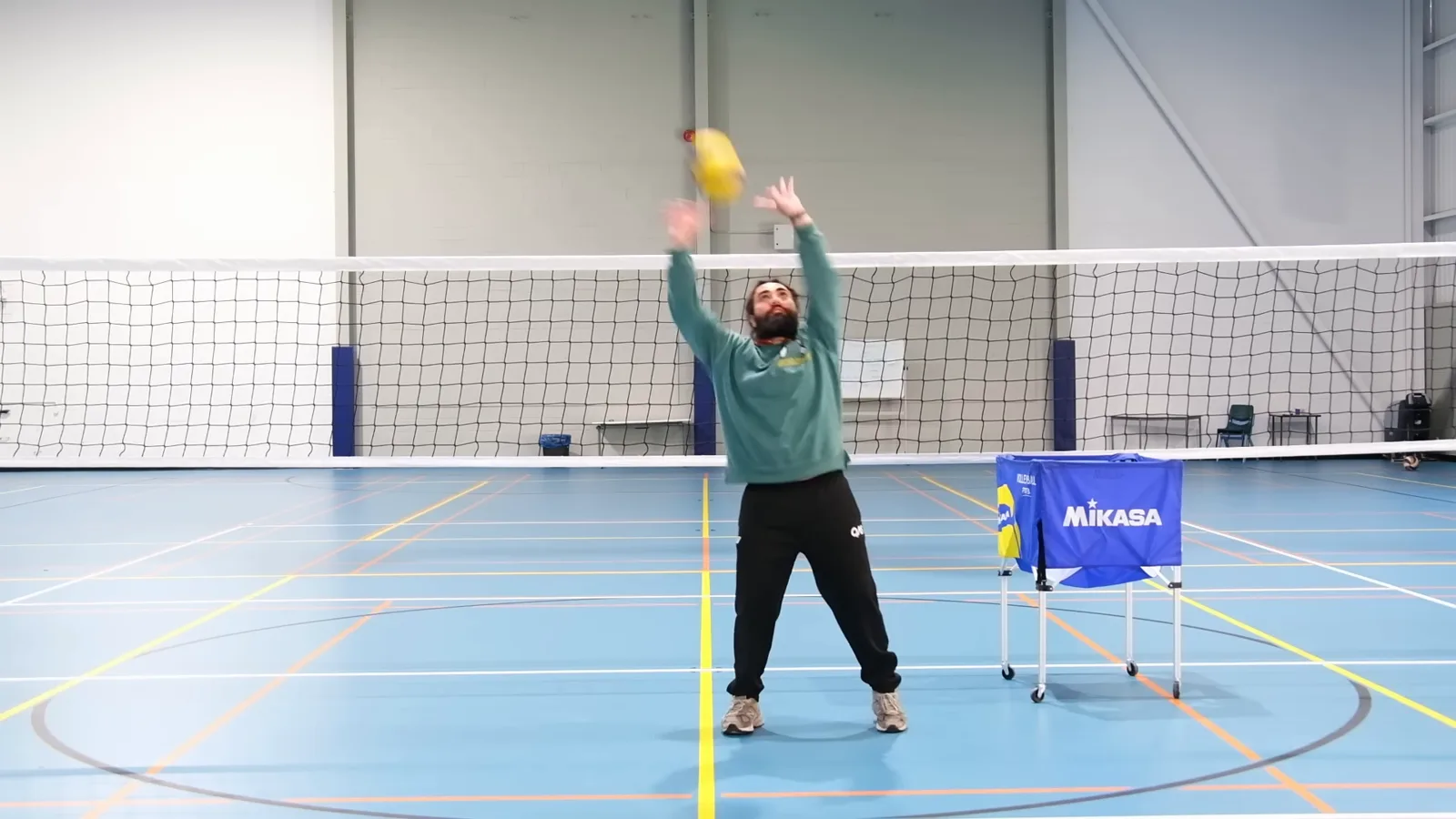
Most players think they're holding when they're not, so exaggerate it. Step one, not step 50.
Habit four: you set from your chin
Setting from the chin feels powerful. Dip your hands down, fire the arms, push. But it makes you predictable. Forward sets and back sets become two different movies. When I play a chin setter, I know where the ball is going before they do.
The fix: set from your forehead. Hands up high, contact right on top of your head. If your hands weren't there, the ball should bop you on the forehead, not the chin.
Now both sets look identical. The question after every rep: did that look like a back set? A well-shaped forward set should look exactly like a back set from the blockers' side. You'll generate less power at first. Do it anyway. The information you give away is a privilege, so don't give it away for free.
And if you think you're not a setter: you could be. Don't close that door.
Habit five: you push away from the ball
In the pursuit of power, people do bad things. You lean back and shove the ball away. And here's the cruel joke: you lose power when you force it, because pushing away takes your weight off the ball.
For juniors, this is everything. Your arms are tiny. Mine are too. Your arms steer, your body pays.
The fix is footwork: move your feet faster, get underneath the ball, and step into your target as you contact. Contact, push through. Get there on time with a stable foundation and the set is powerful and controlled, no matter where the ball is.
How to set a volleyball the same way every time
Five habits, five fixes. Here's how to make them stick.
Toss the ball up and set it straight back to yourself, soft and tidy, trying to land it on top of your head. Then ask: did that look like a back set? If the ball drifts, check your burger hands. If it lands short or long, check your feet.
Add the exaggeration: freeze your hands above your head for a full second. Out loud if you have to.
Get eyes on you. Ask a friend or your coach to watch one thing: your footwork before, during and after the set. Non-players will nail it if you give them something exact.
Were both my feet stuck to the floor before, during and after? Did the ball land on top of my head? Could you tell where I was going?
Ask your practice buddy these exact questions
Practice consistent movements, get consistent sets. It's too easy.
Watch the full breakdown on my YouTube channel: Why Your Sets Are Inconsistent - 3 Habits Holding You Back.
Train your set with me in Brisbane
That's a lot of homework, so let me make it easy. If you're in Brisbane, come train with me. Skybound Volleyball trains at Macgregor State High School, capped at 16 players. I'll watch your footwork, hands and forehead, and tell you which habit to kill first.
Want one tip for every other skill too? Read How to get better at volleyball next.
See the schedule on the programs page, or register on the Skybound portal.
Two feet in the mud. Burger hands. Contact on the forehead. Hold for one. Fix one habit per session, and your spikers will thank you. Good journey.